

 Image 1 of 1
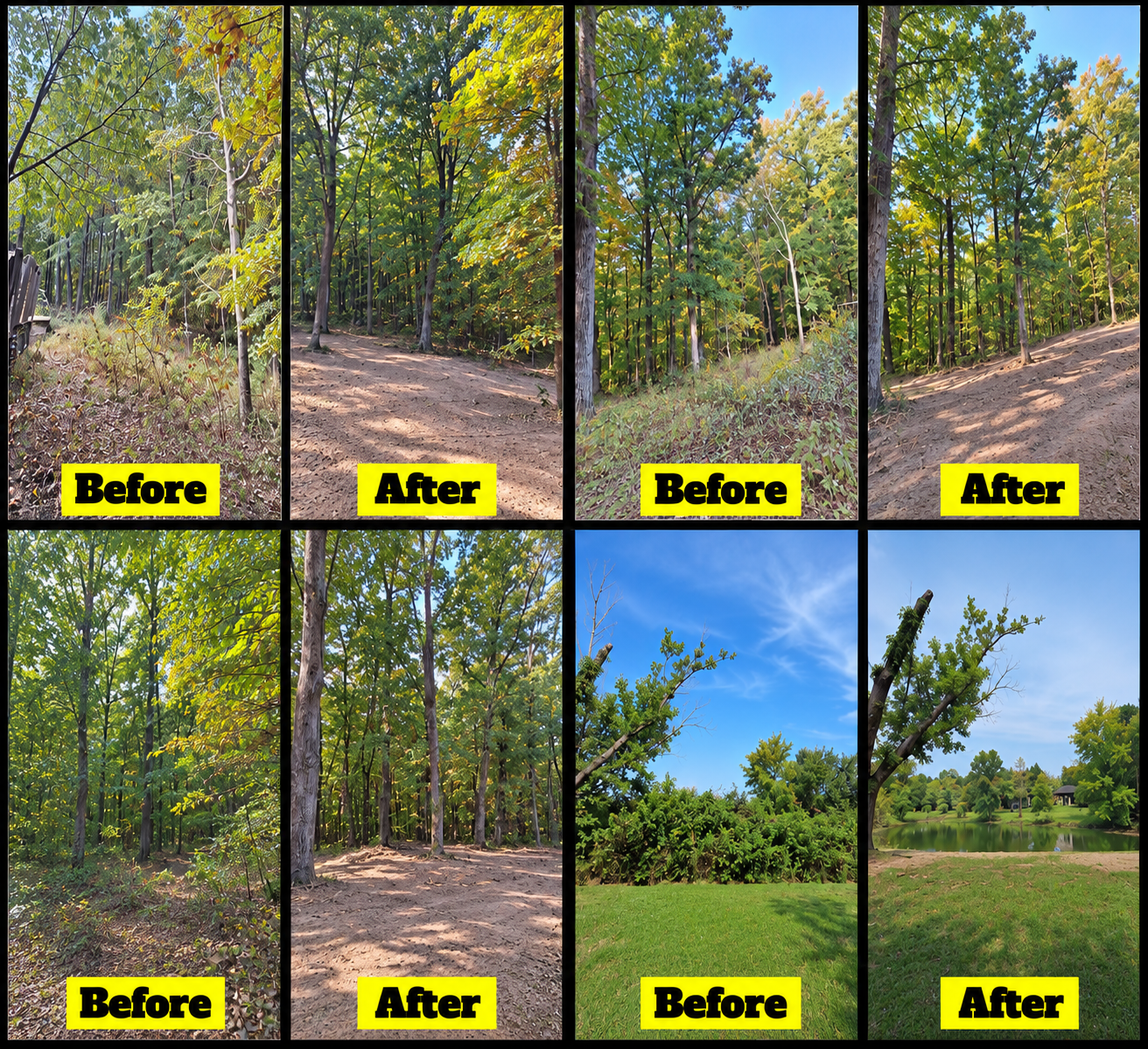
Land clearing is the process of removing vegetation, trees, stumps, brush, roots, rocks, and other natural or man-made obstacles from a parcel of land to prepare it for a new use. Methods range from manual cutting and hauling to mechanized clearing with bulldozers, excavators, mulchers, and brush hogs. Clearing can be selective (removing specific plants or trees while preserving others) or total (clearing the entire site). Proper land clearing often includes stump removal, grading, debris removal, erosion control measures, and sometimes regrading or berming.
Benefits of land clearing
Site preparation for construction: Clearing removes obstacles and creates a safe, level work area for foundations, roads, utilities, and building equipment. It helps meet building-code setbacks and easement requirements.
Improved access and safety: Clearing brush and dead trees opens driveways and access routes, reduces hiding places for pests, and lowers wildfire risk by reducing fuel loads.
Enhanced visibility and security: Removing dense undergrowth improves sightlines across a property, making it easier to monitor activity and reducing opportunities for trespassing.
Better land use and value: Cleared land can be converted to agricultural use, pasture, yards, driveways, parking, or development lots, often increasing the usable acreage and marketability of a property.
Pest and disease control: Removing diseased, invasive, or overcrowded vegetation can halt the spread of pests and pathogens and improve the health and growth of remaining plants.
Improved drainage and erosion control: Properly planned clearing and grading can correct drainage issues, reduce standing water, and prepare ground for erosion-control installations like silt fences, terraces, or retention basins.
Easier maintenance: Landscaped yards, lawns, or managed fields require less ongoing effort than unmanaged brush or forest edge; mowing, planting, and irrigation are simpler on cleared ground.
Fire mitigation: Reducing dense brush and ladder fuels near structures lowers the chance of wildfire ignition and spread, improving defensible space and potentially lowering insurance costs.
Opportunity for landscaping and hardscaping: Clearing creates a blank slate for installing lawns, gardens, patios, retaining walls, driveways, and other site improvements that increase functionality and curb appeal.
When done properly, land clearing makes a property safer, more functional, and more valuable while setting the foundation for construction, landscaping, or agricultural use.